

WA-led research gives hope for better recovery after stem cell transplant
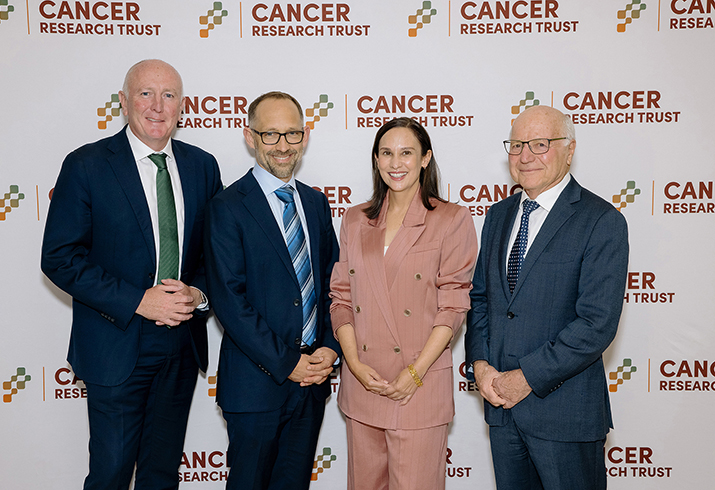 Four person (l to R) - Minister Medical Research, Stephen Dawson, QUOKKA Chief Investigators Duncan Purtill and Allison Barraclough and Cancer Research Trust Director Peter Leonhardt.
Fiona Stanley Hospital researchers have secured $5 million for, QUOKKA, a research project aiming to develop more personalised post-transplant care for people with acute myeloid leukaemia (AML).
The funding is provided through the Cancer Research Trust's WA Collaborative Cancer Research Grants program, co-funded by the WA Government’s Future Health Research and Innovation Fund, with the potential investment reaching $9 million based on the projec's progress.
Led by Dr Duncan Purtill, Dr Allison Barraclough and Dr Stephanie Lam, QUOKKA will bring together clinicians, researchers and patients from WA and the United States to develop more personalised approaches to post-transplant care for people with AML.
The research will investigate targeted donor cell therapies tailored to each patient’s immune needs. By better understanding why immune recovery differs between patients following transplantation, the team hopes to accelerate recovery and improve long-term outcomes.
Stem cell transplantation offers many AML patients their best chance of survival, yet we still don't fully understand why some people recover well while others experience relapse or serious complications, Dr Purtill said.
"By combining WA's world-class transplant expertise and uniquely collaborative research environment, the QUOKKA team is on a mission to improve the current standard of
care for AML patients globally.
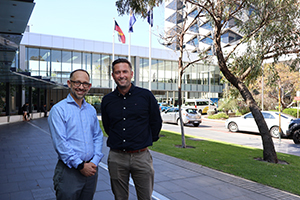
For patients like Trent, the WA-led research program offers hope of better recovery following stem cell transplantation.
His acute myeloid leukaemia (AML) diagnosis came completely out of the blue.
The 38-year-old father of two was fit, active and still running and playing sport when a mild cold quickly developed into severe pneumonia.
After driving himself to the emergency department as a precaution, Trent was diagnosed with pneumonia and AML within hours.
"It was a shock. I had no signs or symptoms. I was a healthy person and nobody in my family has had anything like this, Trent said.
"I also remember the incredible medical team that broke the news to me and described the plan and the journey that I would likely go through.
I knew immediately that it would be a long road, but I was in the best hands possible and that I could survive.
After treatment for pneumonia and intensive chemotherapy, Trent transferred to FSH for consolidation chemotherapy and an allogeneic stem cell transplant.
His sister travelled from Melbourne to be tested as a potential stem cell donor and was found to be a match.
For Trent, research aimed at improving recovery following stem cell transplantation offers hope that other patients facing blood cancer will have an even better chance of returning to the people and lives they love.
"It means that people who have a similar illness to me will have a better chance of surviving and continue to be able to enjoy their lives with their friends and family. It's brilliant, Trent said.
"I also think that this grant is fantastic recognition for the haematology doctors in Western Australia who are doing incredible work, day in and day out.
Importantly, this significant investment is another exciting research funding success for SMHS, reflecting the expertise of our FSH Haematology team and the support of our SMHS Research team in securing the funding and progressing this important work.
Keep up to date with our news and achievements
Find out more on Facebook (external site) or LinkedIn (external site)