

First cohort of clinical psychologists complete dedicated registrar program
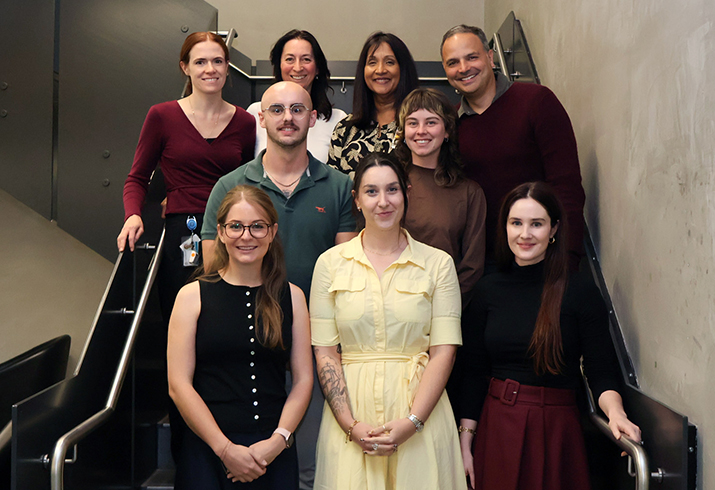
This month the first cohort of registrars will complete their two-year training to become endorsed clinical psychologists as part of the Fiona Stanley Fremantle Hospitals Group.
Launched in 2023, the State’s first coordinated clinical psychology and neuropsychology registrar program provides early career clinicians with a cohesive training environment and supported pathway into complex tertiary health roles.
Following completion of a Clinical Masters or PhD, and becoming eligible for general registration, the Australian Health Practitioner Regulation Agency requires psychologists to undertake a two-year registrar program.
This includes up to 3,000 hours of supervised practice, including 80 hours of individual board-approved clinical supervision, and 80 hours of active continuing professional development to gain practice endorsement as a clinical psychologist or clinical neuropsychologist.
FSFHG Consultant Clinical Psychologist and Head of the Clinical Psychology and Clinical Neuropsychology Department, Hyranthi Kavanagh, said the need for the dedicated registrar program came about following a rising demand for psychological services in both the public and private sector
“Faced with a diminishing experienced workforce in public health and the increasing complexity of tertiary healthcare, our department acknowledged a formalised registrar program at Fiona Stanley and Fremantle Hospitals was needed,” Hyranthi said.
“From there, a structured, dedicated registrar program was developed to attract early career clinicians to tertiary health – and additionally – to give early career psychologists access to specialised training required for complex hospital-based roles across a broad range of hospital settings.
“This includes acute and subacute medical and surgical specialties, aged care, rehabilitation, and mental health with the aim to extend the pre-requisite learning between university graduation and independent clinical practice, and real-world experience with multidisciplinary health teams.”
Involved with the initiative since 2024, Joe Waters recently finished the registrar program and said it was extremely valuable to have a shared sense of identity amongst the group.
“Constantly being surrounded by a group of people in the same stage of their career was really important – we had a place where we could all come together to learn,” Joe said.
“This marks the end of what’s been an eight year long journey – from starting university to being endorsed as a clinical psychologist – and I can focus on where I want to take my career and what interests me now that I’ve completed my formal training.”
After completing her Combined Masters and PhD together, Zoe Waters said the biggest benefit was having access to a program that was designed especially for clinical psychologist or clinical neuropsychologist that allowed them to come together as a cohort of registrars.
“The training wheels are off,” Zoe said.
“We’re now fully responsible for the work we do, and while that’s quite daunting, the program was purpose built for us so that we can really find our identity collectively and as individuals.
“While I’m still figuring out what comes next, I do know that I have a good support network of fellow clinicians who are continuing to grow and develop.”
With 13 registrars successfully progressing through the current program, the initiative has been well received by trainees completing their qualifications, with growing interest for new positions.
“The impact psychology workforce shortages have on public hospitals was highlighted in the recent Australian Government’s Psychology Supply and Demand Study, and it’s initiatives like ours that really make a difference in an area of need, whilst maintaining excellent standards of clinical training required for working in complex tertiary hospital settings and providing safe patient care,” Hyranthi said.
“Rotations across a broad range of specialty areas ensure depth of real clinical work, skill growth, and exposure to diverse practice within multidisciplinary environments – all key drivers of engagement, motivation, and staff retention.
“We also acknowledge all the board approved supervisors within the department of Clinical Psychology and Clinical Neuropsychology who have supported our registrar workforce.”
A supported workforce that both Joe and Zoe agree have put them on the right path for their future clinical careers.
Keep up to date with our news and achievements
Find out more on Facebook (external site) or LinkedIn (external site)